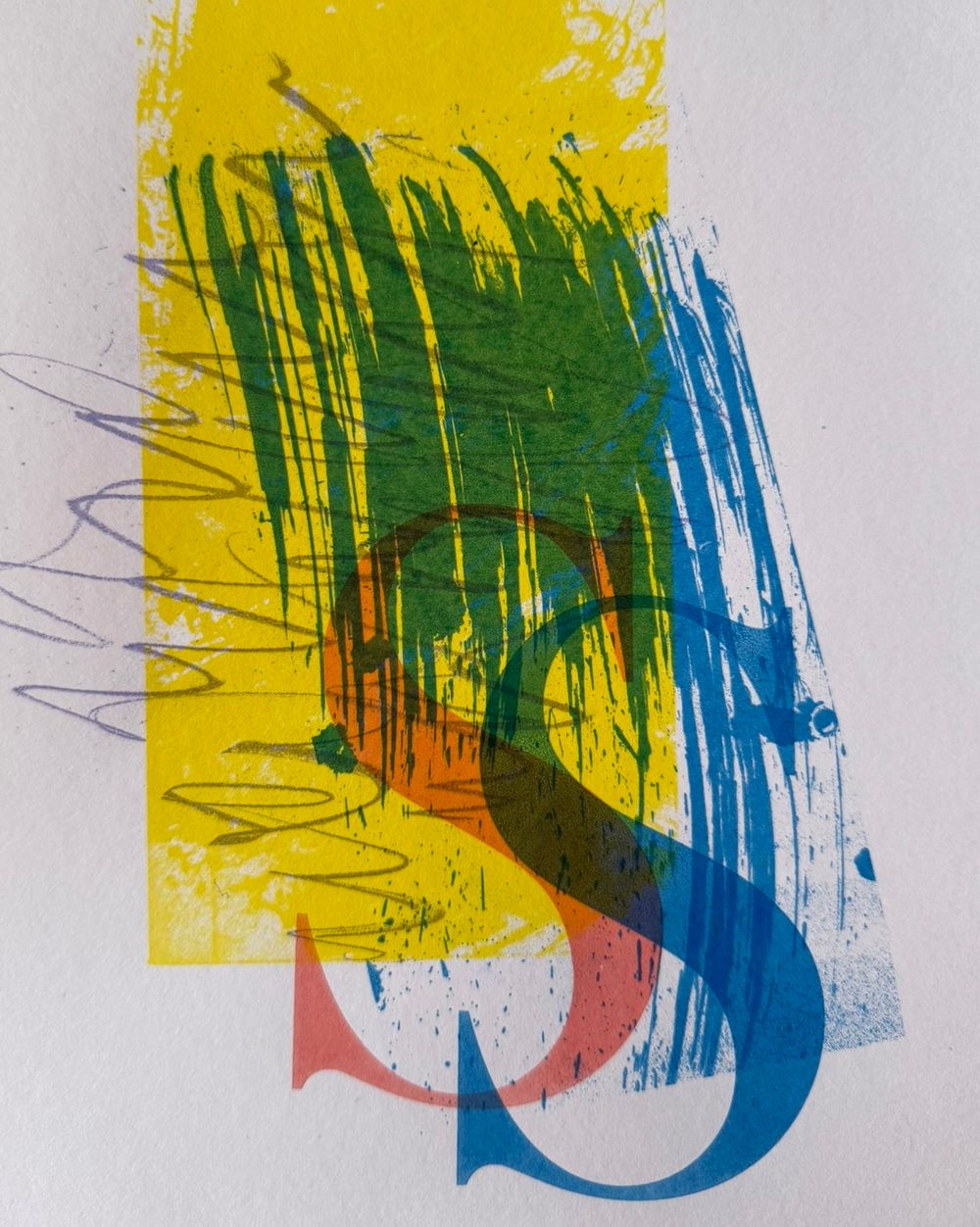
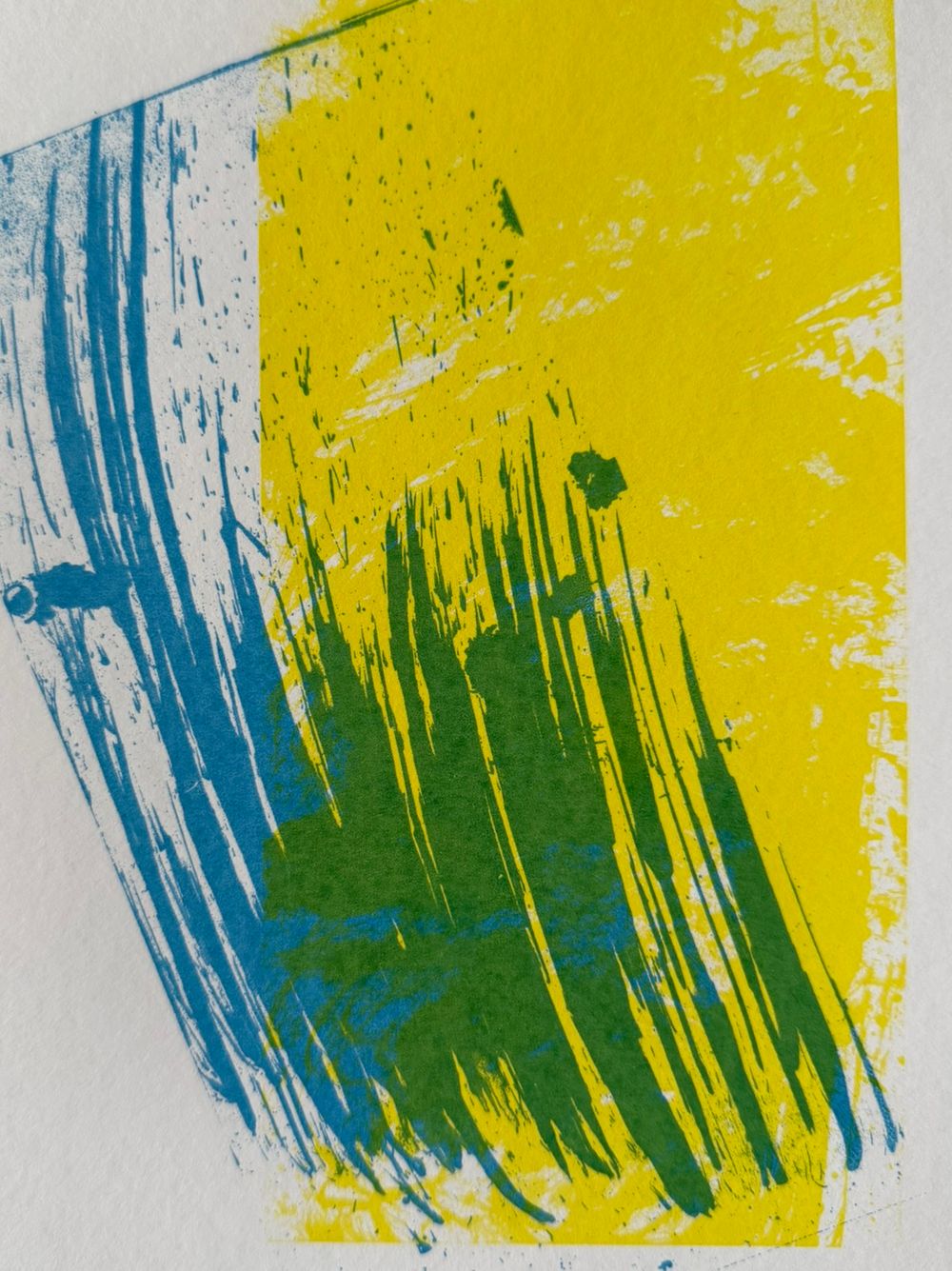
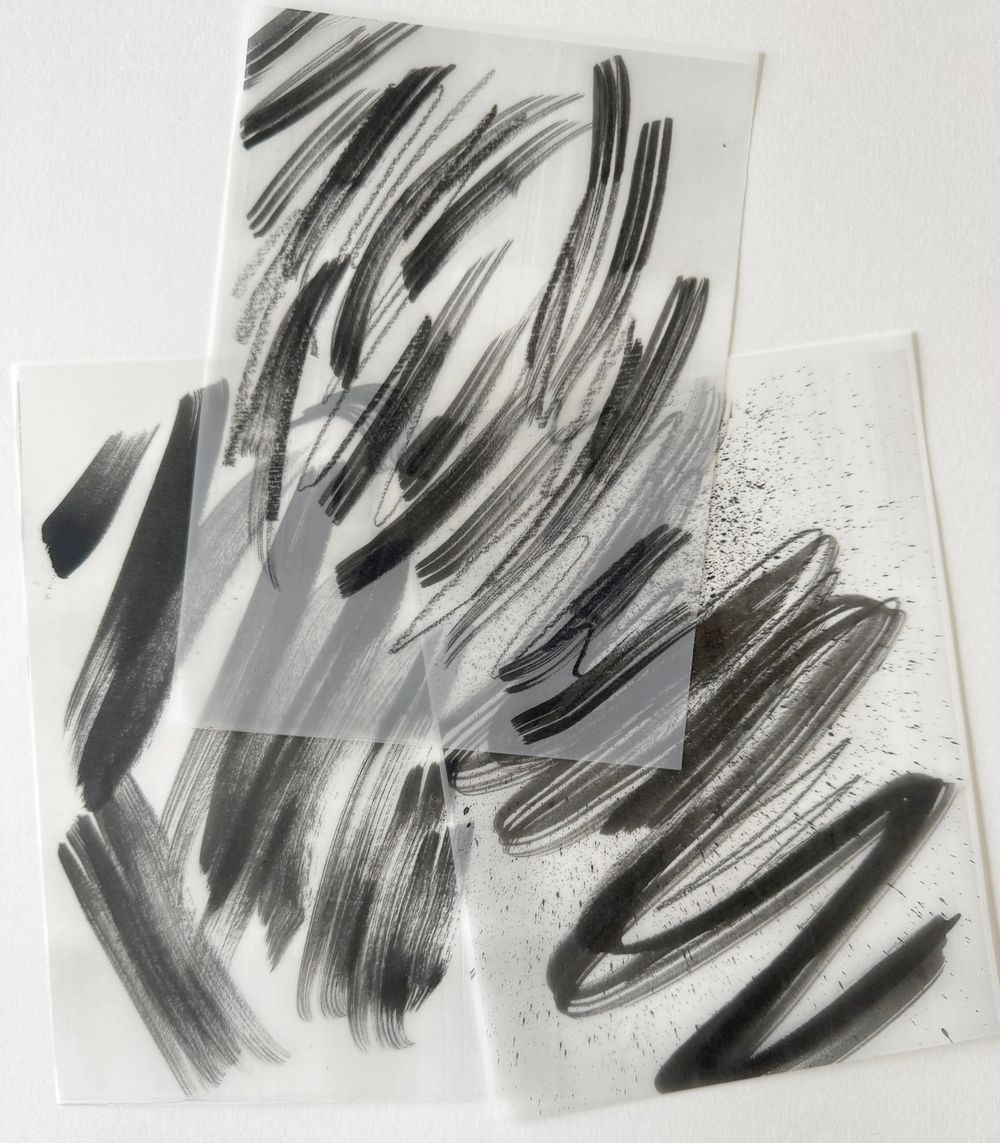
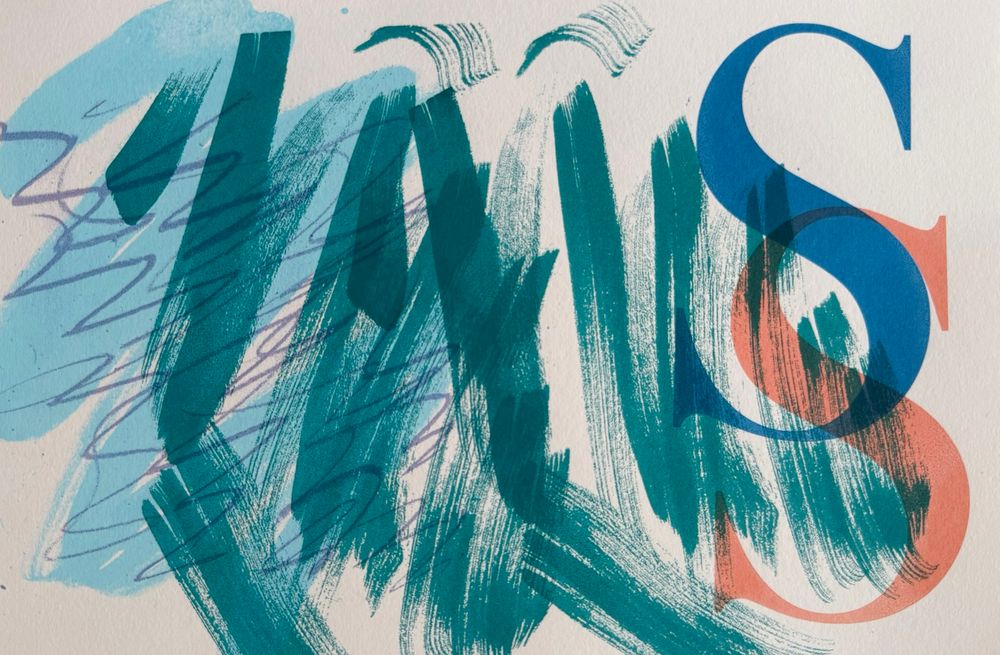
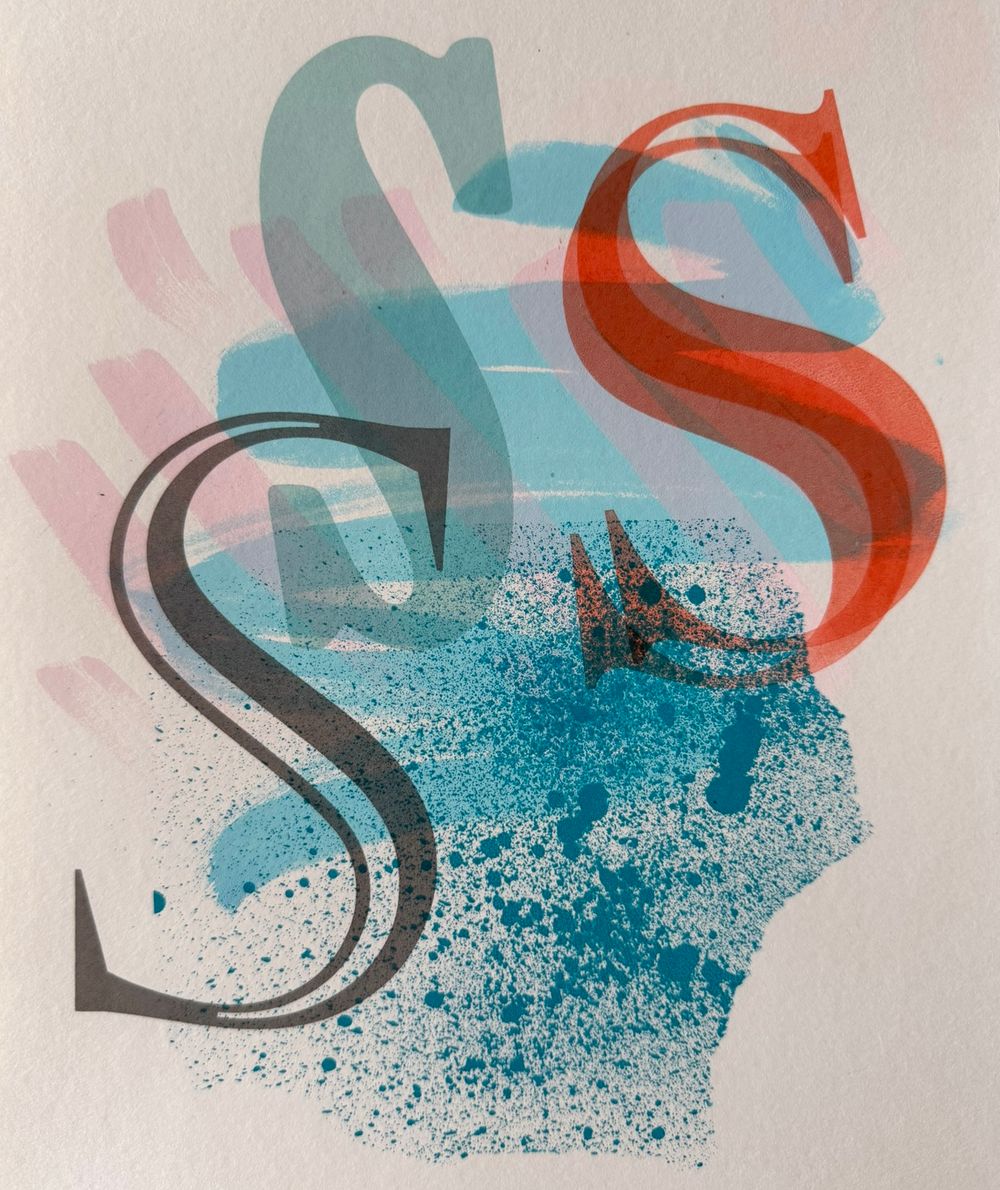
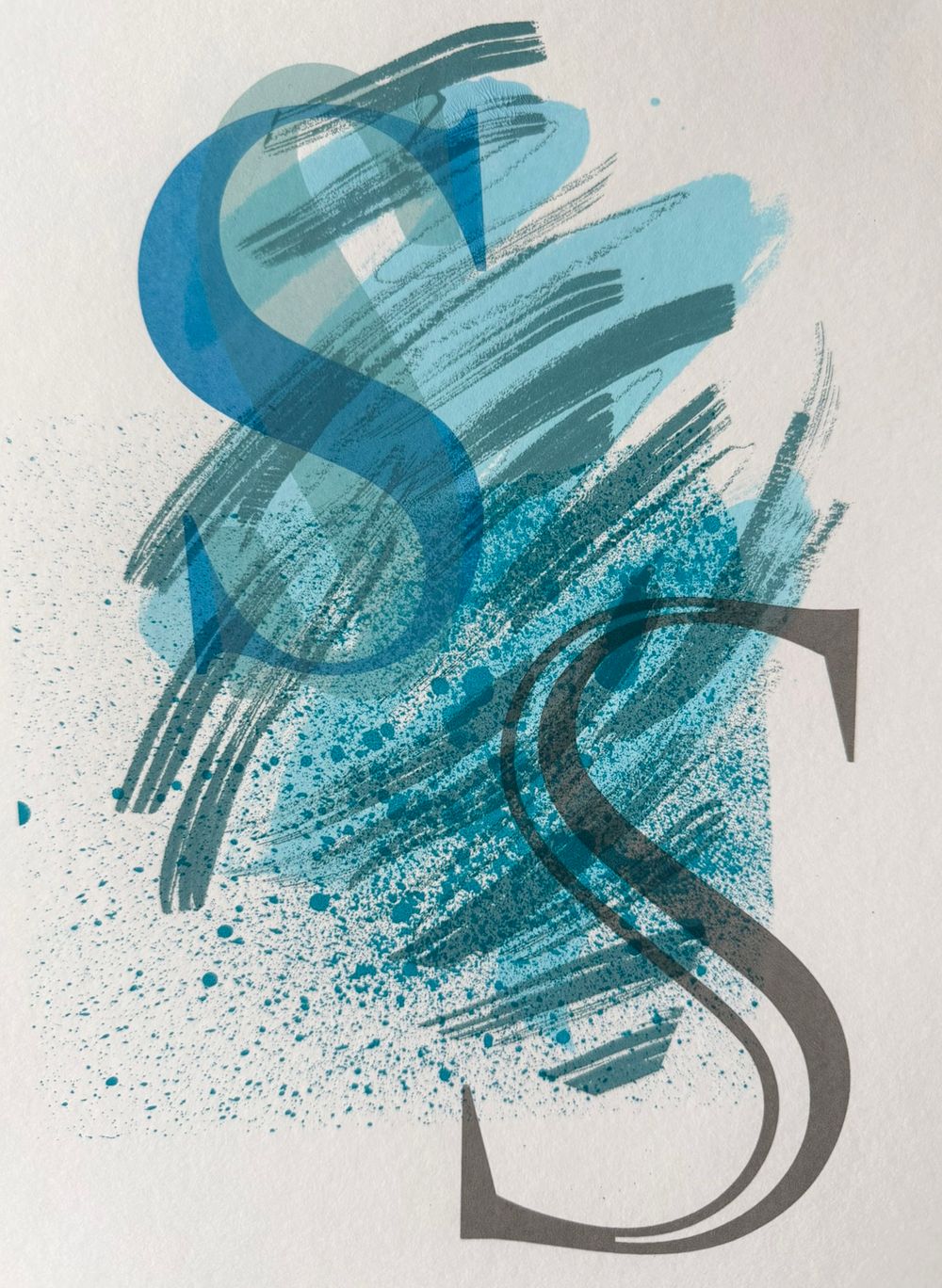
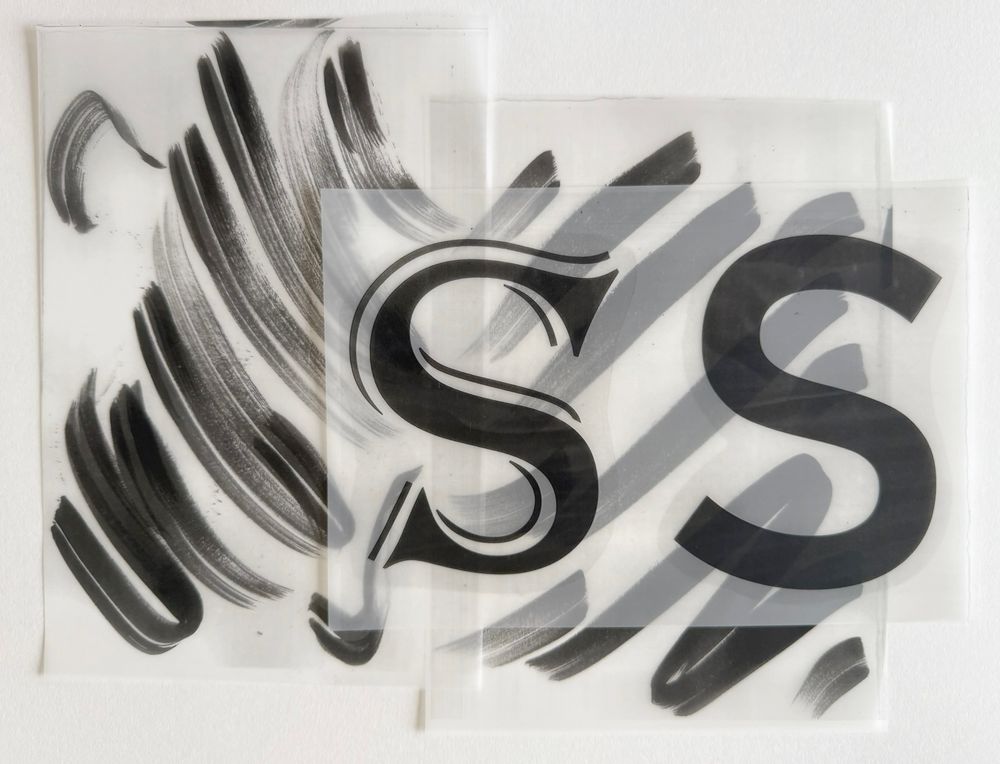
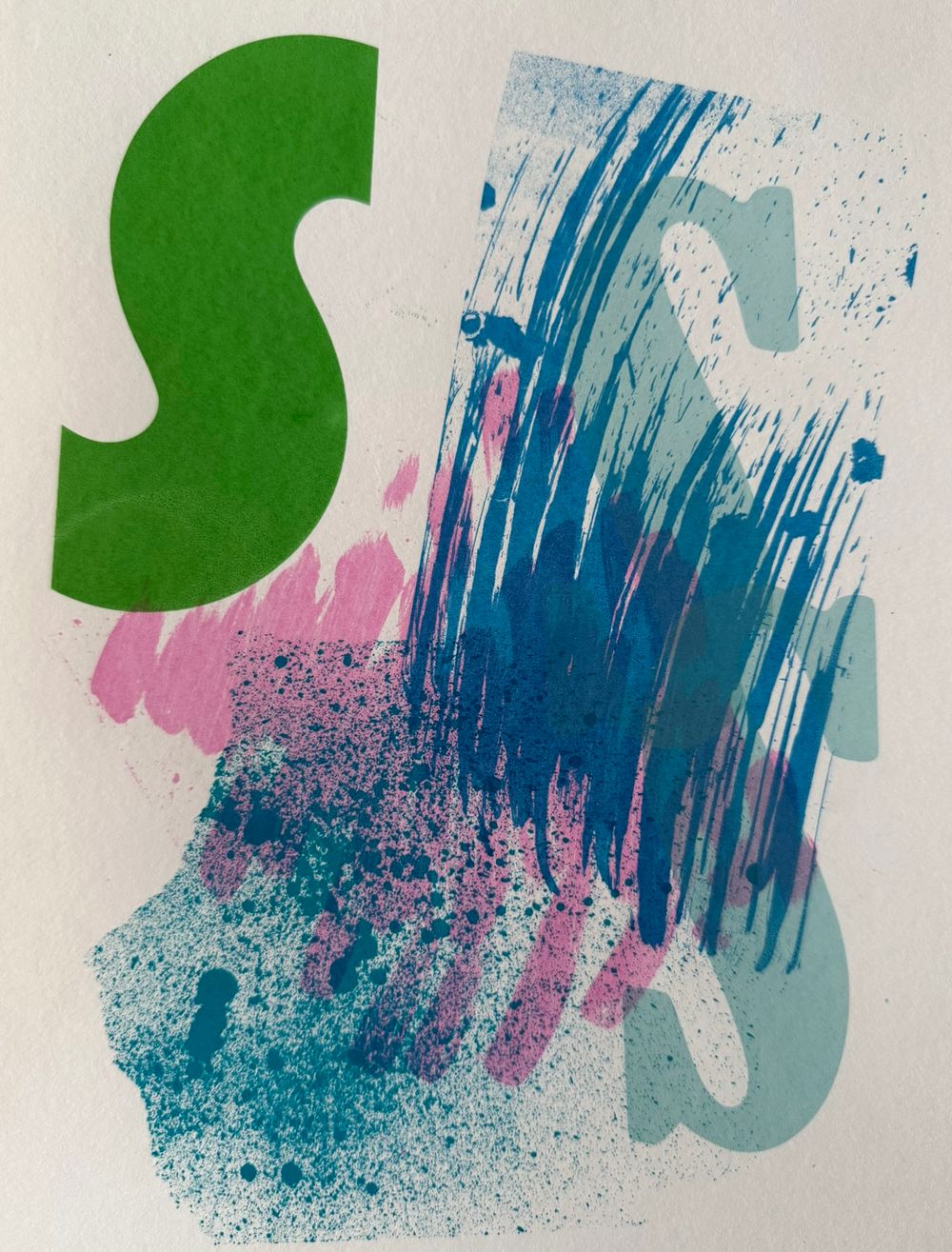
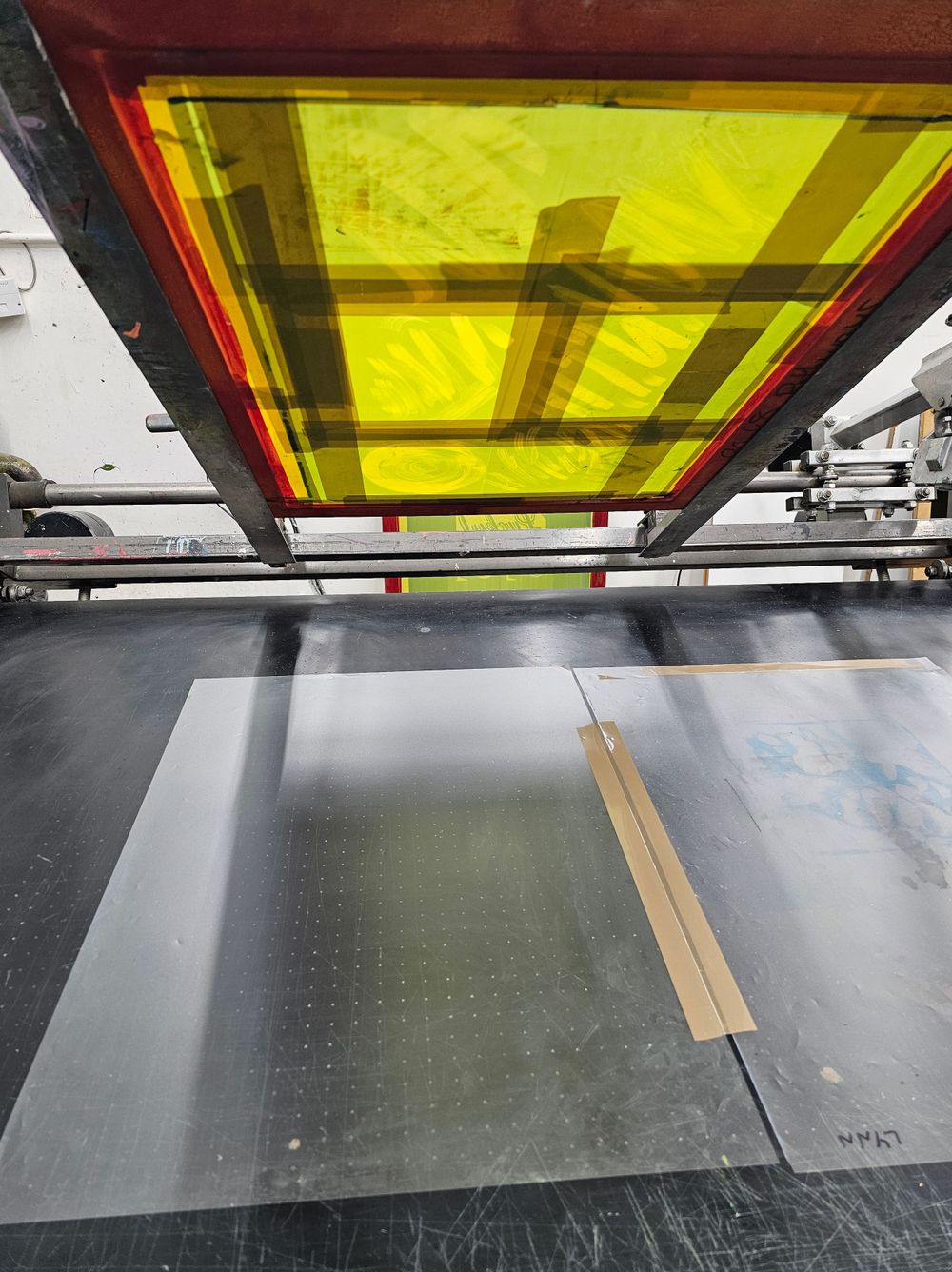
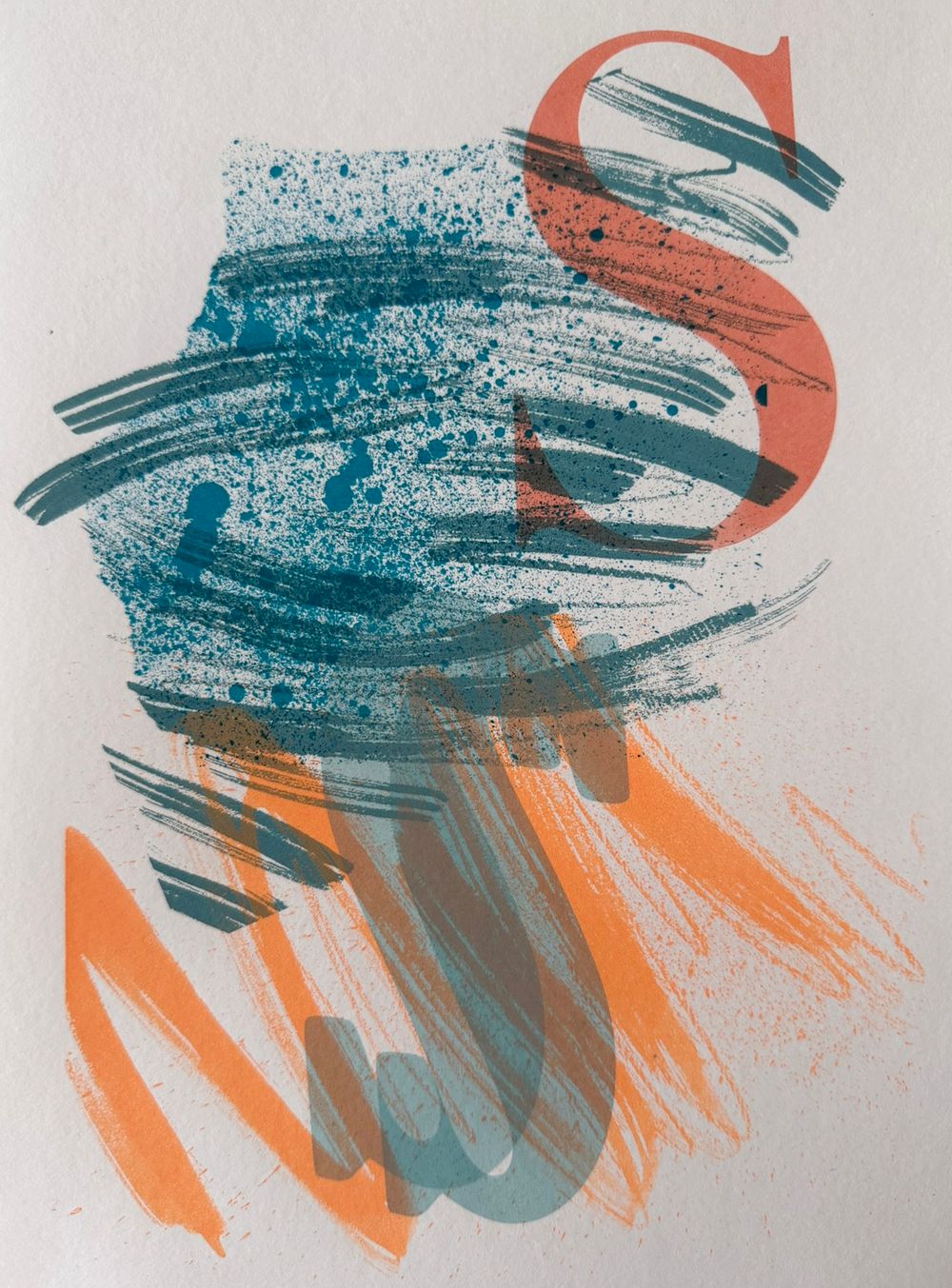
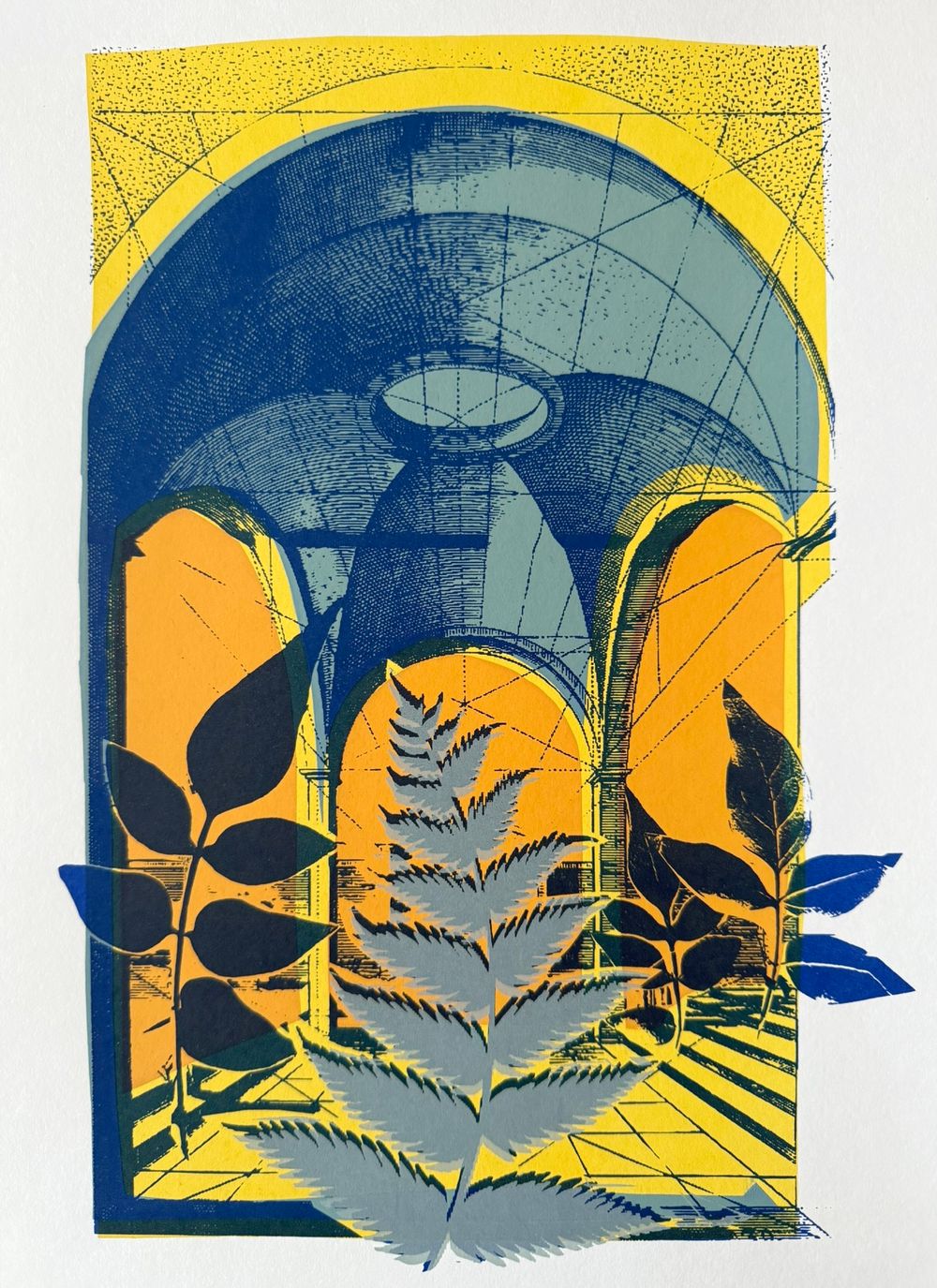
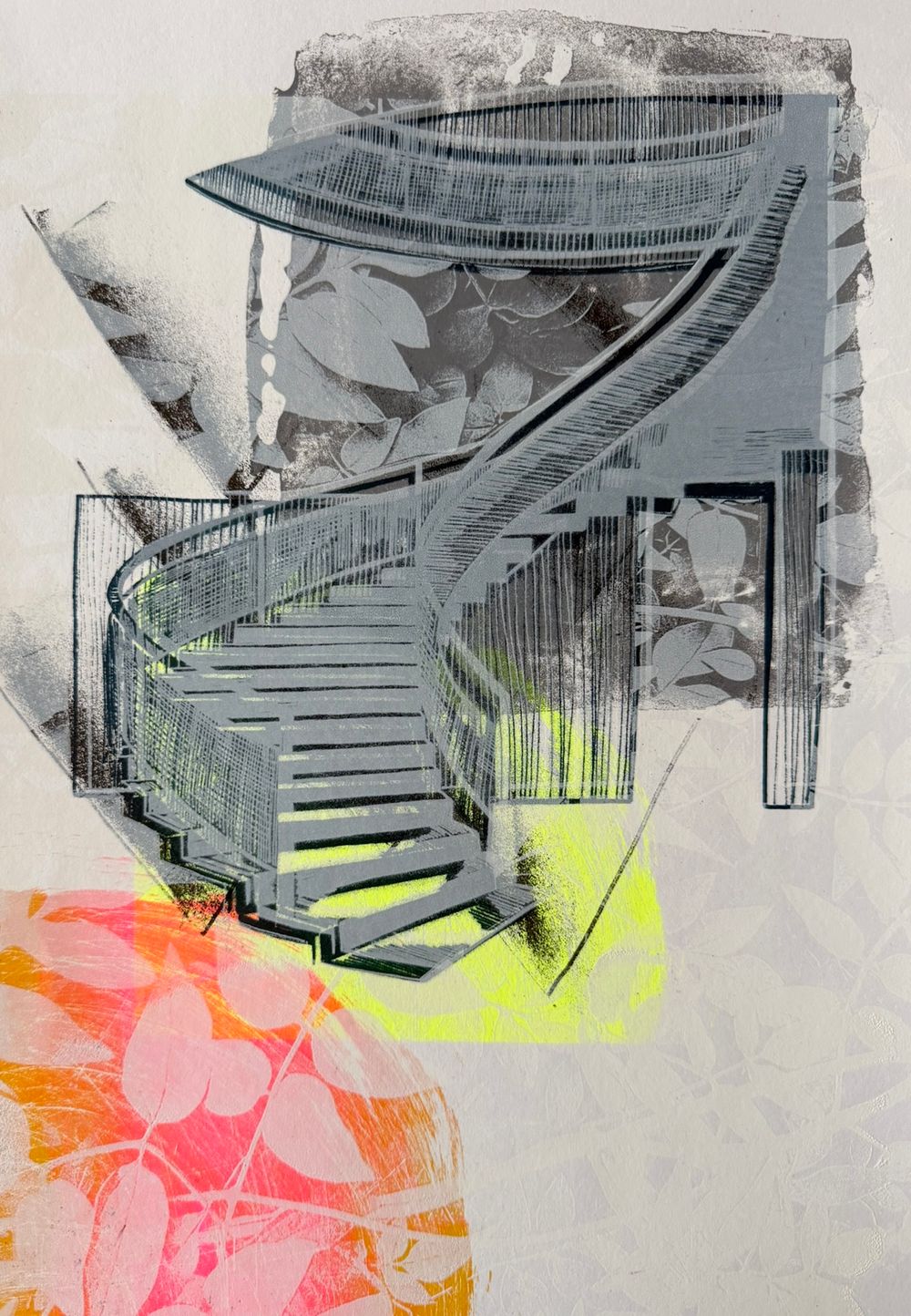
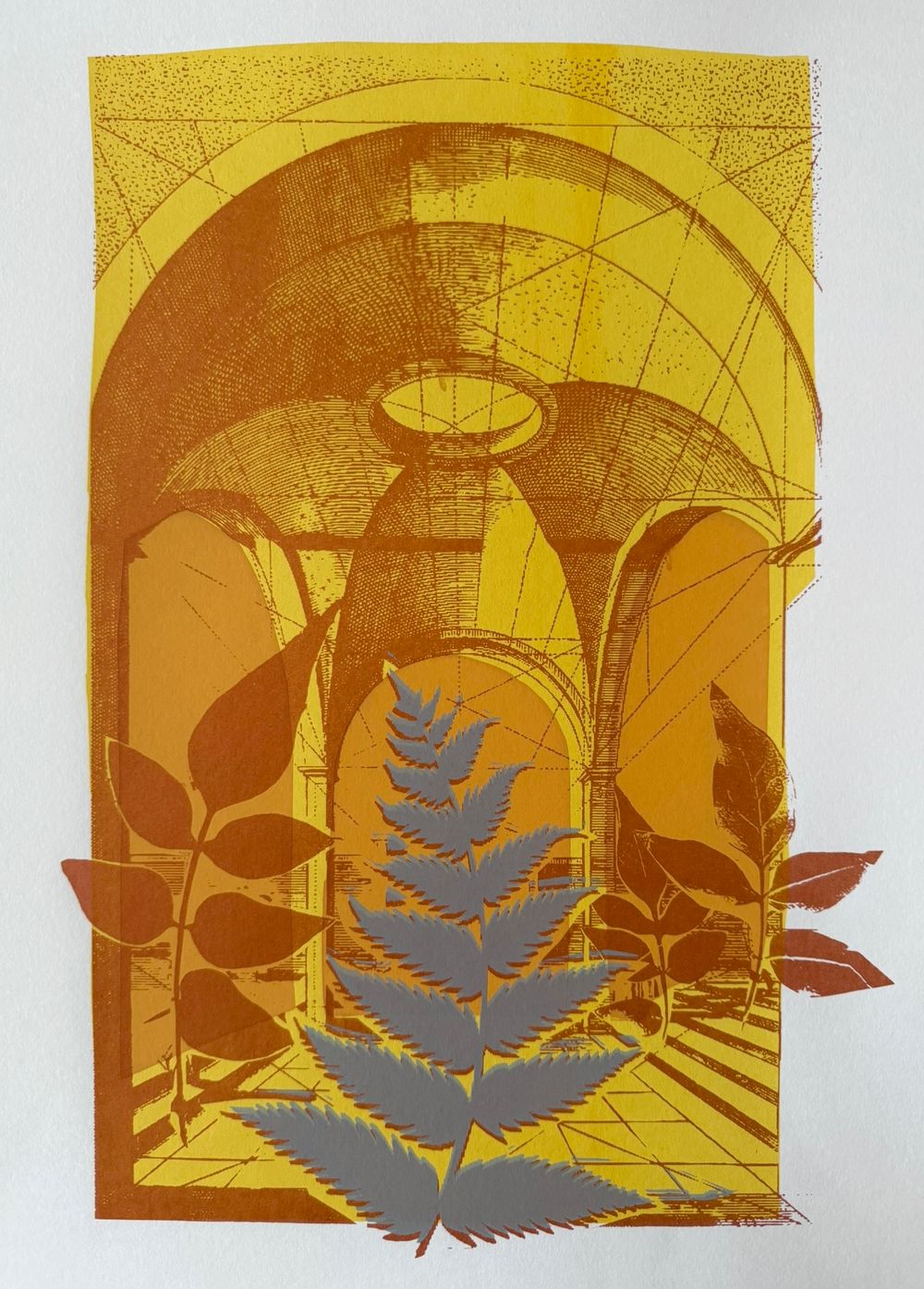
Screen-printing originated in China with the use of paper stencils for textile printing during the Song Dynasty in 960 - 1279AD. The invention of light sensitive emulsions and mechanization from the 1900's onwards marked the industrialisation of Screen-printing in textiles and other mass production lines. Historically, screen-printing holds an alternative timeline of sub-cultures, stretching the technical boundaries to create beautiful independent prints for Art & Design purposes. Returning Screen-printing to its pre-industrialised roots, there are artist/ researchers experimenting with ways of making the process more sustainable, like Greta Facchinato and Studio Slow Lane. Testing alternatives to minimise or replace the use of harsh chemicals and plastic based paints and mediums. Also reclaiming slow handmade printing processes that value unique and innovative design.
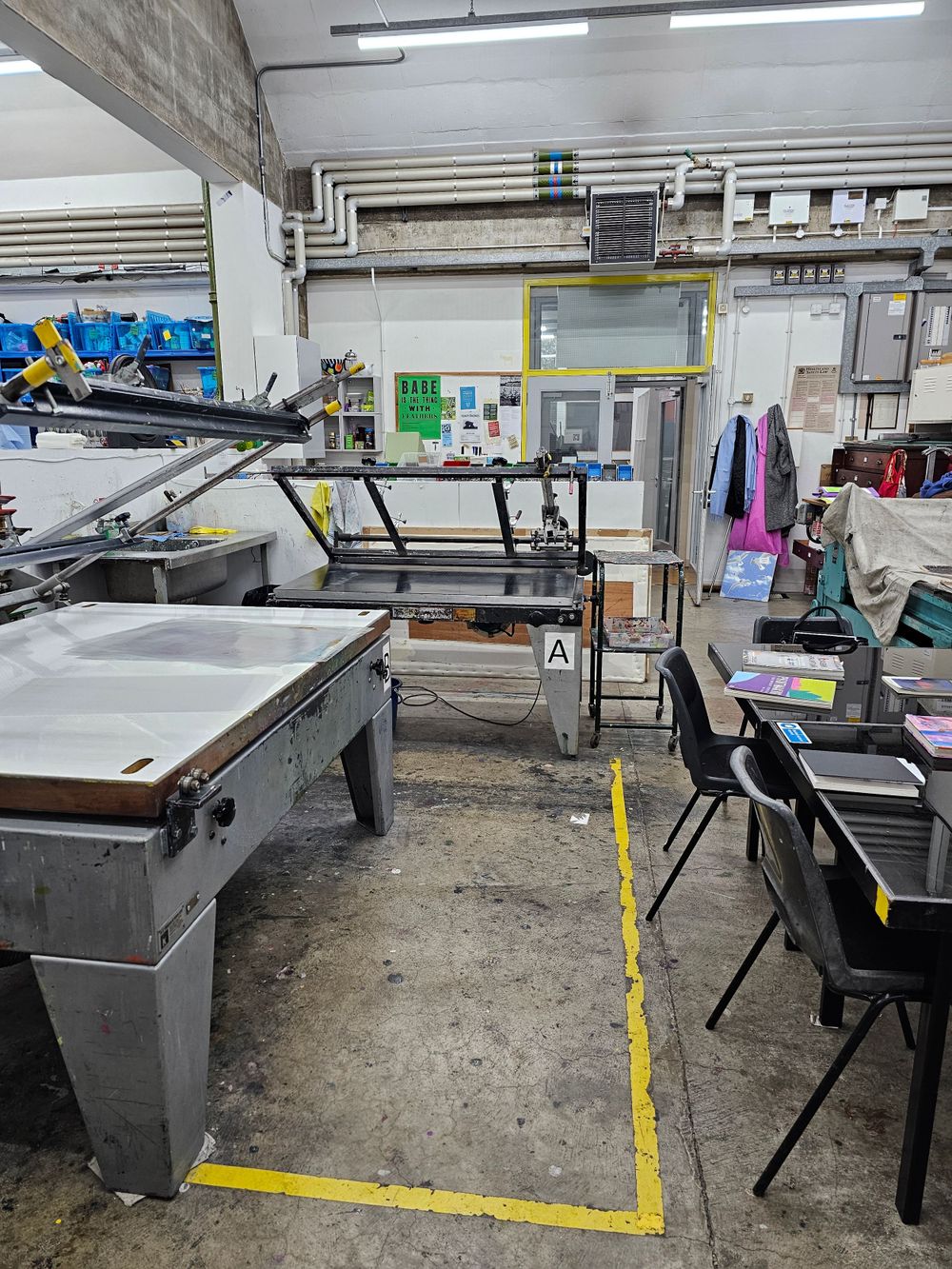
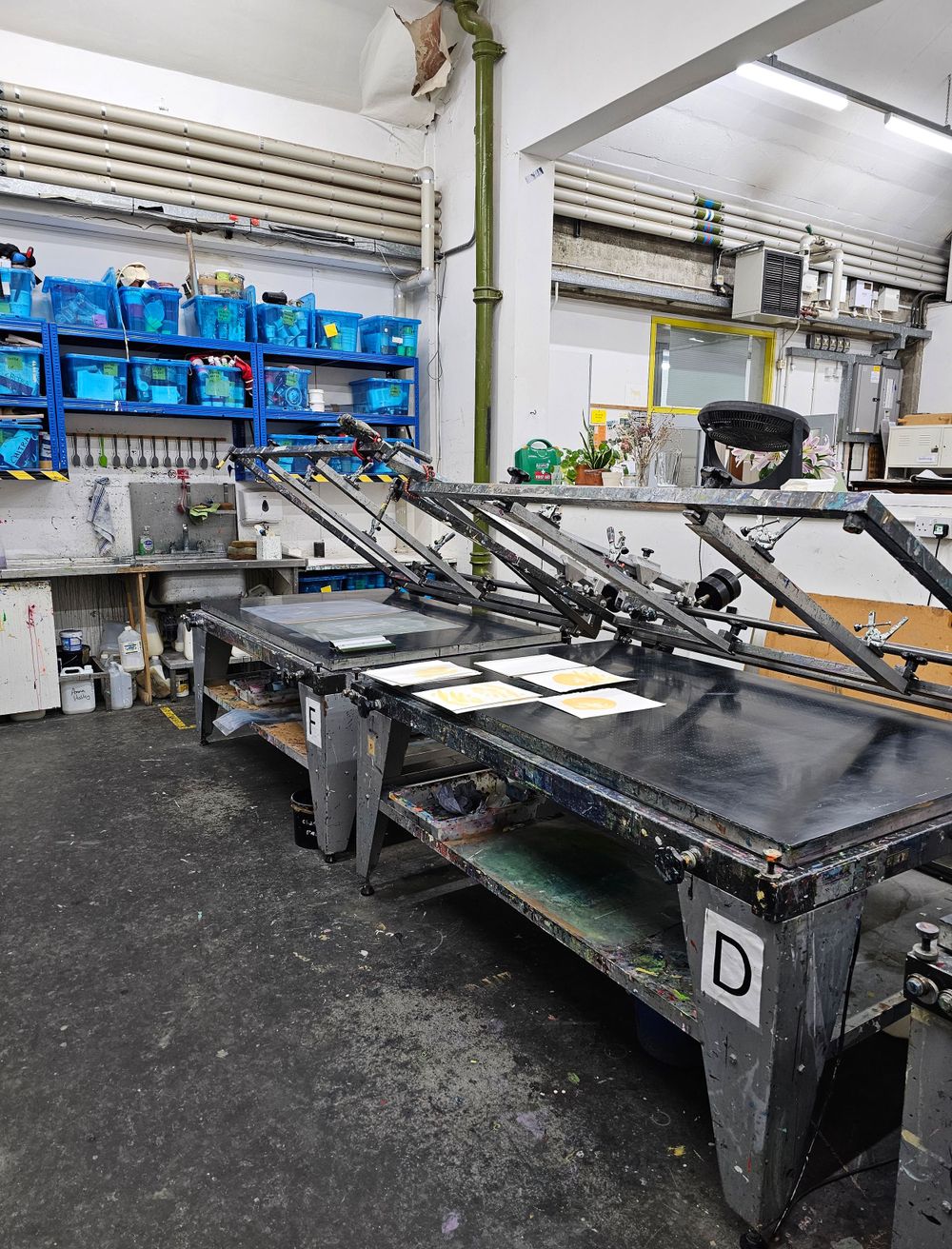
Really loved learning the ropes with Screen-printer, Gail Mason; her multi-layered printed landscapes make use of an open screen with no use of emulsions. Here is a list of take aways from my printing in Spike Print Studio; - Colour mixing, colour matching and colour layering is a whole world of its own. - Create a variety of textures and marks with the use of different drawing materials. -Mark resist has many handy uses (drawing & registering prints). - Collage & paper cutting can be used to block off sections of a print or create a new layer. - Testing and playing naturally reveals possibilities. - Create test swatches to reference ongoing experiments, add notes with timings and ratios to replicate results.- A shared printing space works smoothly when everyone keeps it organised and tidy (shout out to the Spike Print technicians who maintain the shared equipment).